Idaho State Capitol
The Capitol anchors the north end of the downtown grid and gives us a fixed reference point for routing crews into the surrounding state and office buildings. Streets radiating from it are our main north-south approach lines.

Disaster Cleanup in Downtown Boise is the trade of removing water, smoke, sewage and mold from a building before the structure and the air inside it are ruined. We have run that trade in Ada County since 2016, and Downtown Boise is where most of our calls start. The housing stock here is old, dense and unforgiving: 1890s brick on the Basque Block, mixed-use buildings in Old Boise, and century-old supply lines that were never meant to see a hard freeze. Add the Boise River running along the south edge of Julia Davis Park and you get a district where a two-inch rain event can flood a basement faster than a sump pump can keep up. We are a Downtown Boise disaster cleanup company that works the ZIP codes 83702 and 83703 every week, not a franchise dispatching from another state. Our technicians hold IICRC WRT and IICRC ASD credentials, and we document every job in Xactimate so your insurance adjuster gets a clean, defensible scope.
Downtown Boise generates a specific kind of disaster call. It is rarely a big suburban basement flood and more often a supply line that failed behind a wall in a 1920s commercial building, or a crawl space under a mixed-use block that has been pulling in groundwater for years. If you need emergency water damage cleanup Downtown Boise or same day disaster restoration near me Downtown Boise, we keep crews staged so we can be on site fast. Here is what we run in this district.

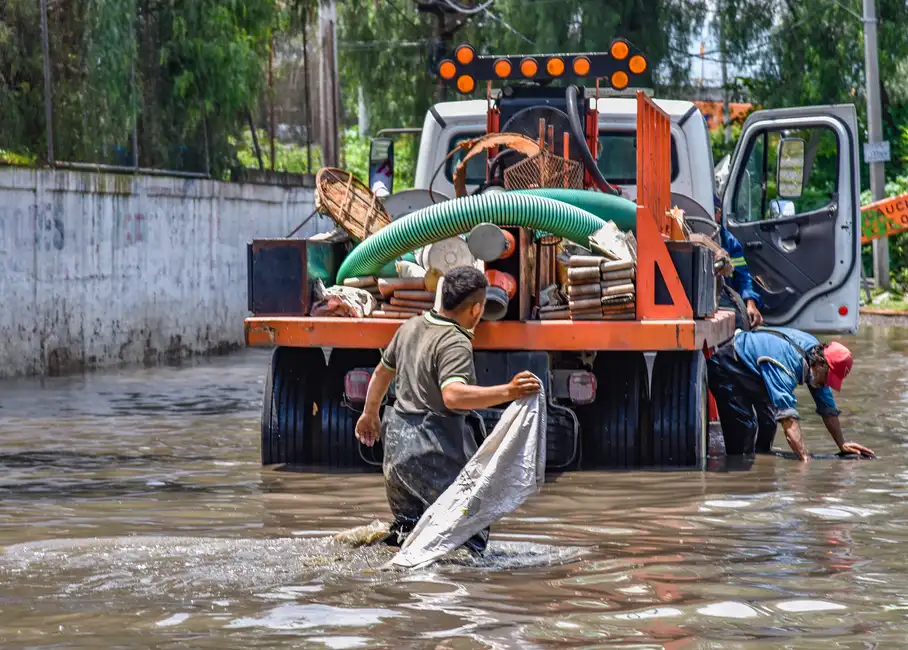


Downtown Boise has a specific set of failure patterns, and they repeat because the buildings and the climate repeat. Century-old plumbing, dense shared walls, cold winters and a river on the south edge all push the same problems onto the same blocks year after year. Knowing what usually fails here is most of the battle. If you are looking for the best Disaster Cleanup Downtown Boise has on call, start by understanding what you are up against.
Boise winters drop hard enough to freeze supply lines in the unheated cavities common in Old Boise and the Basque Block. Older galvanized and early copper lines split at the weakest point and only leak once they thaw, often hours after the freeze.
Downtown Boise sits close to the Boise River, and spring runoff raises the water table under low-lying blocks near Julia Davis Park and River Street. Old foundations, failed drain tile and cracked basement walls let that water in.
Aging cast iron and clay sewer laterals under dense mixed-use blocks are prone to root intrusion, bellies and blockages. When the line backs up, the lowest fixture in the building takes the hit, usually a basement drain or commercial kitchen floor sink.
Plaster and brick hold moisture far longer than modern drywall, and Downtown Boise's historic stock has plenty of both. A small roof leak or foundation seep can feed hidden mold for months before anyone smells it.
Most Downtown Boise disasters do not announce themselves with a flood. They start as a faint smell, a soft spot in the floor, or a water bill that jumped for no reason. If you catch it early, the job is smaller and cheaper. If you wait, you are looking at mold remediation and Disaster Cleanup Downtown Boise ID on a much bigger scale. Here are the signs that mean call now, not next week.
Musty smell that will not go away
A persistent musty odor in a basement, closet or crawl space almost always means active mold growth behind a surface. In Downtown Boise's older buildings, it usually traces to a slow foundation seep or a pinhole leak in a supply line. Mold spreads fast once it is established, so this is a call-today sign.
Warped or soft spots in the floor
A floor that gives slightly underfoot or shows cupping at the seams has moisture underneath it. In a downtown loft or ground-floor commercial space, that often means a leak in the assembly above or a slab that has been wicking water for months. Left alone, the subfloor and framing start to rot.
Water stain spreading on a ceiling
A ceiling stain that grows or darkens between checks is an active leak, not an old one. In shared-wall downtown buildings the source is frequently two floors up or in a neighboring unit. We trace it with thermal imaging cameras and moisture meters rather than guessing and opening the wrong ceiling.
Water bill jumped with no explanation
An unexplained spike in your water bill is one of the most reliable signs of a hidden leak. In older Downtown Boise buildings, a failed supply line inside a wall can run for weeks before it shows on a surface. Finding it early is the difference between a dry-out and a full wall rebuild.
Sewage smell or backup in a basement drain
Any sewage odor or slow basement drain in a downtown building is a Category 3 hazard, not a plumbing annoyance. It means waste is entering the space and contaminating surfaces. Do not mop it up yourself. We remove the contaminated material, disinfect and dispose of it legally.
Downtown Boise is compact, but the one-way streets, event closures and loading restrictions change how fast a crew can reach you. We use the major landmarks as orientation points when we dispatch, and we plan routes around whatever is happening at the Boise Centre or along the Capitol corridor that day. If you can tell us the nearest landmark, we can usually tell you which alley or side street we will stage on before we arrive.
The Capitol anchors the north end of the downtown grid and gives us a fixed reference point for routing crews into the surrounding state and office buildings. Streets radiating from it are our main north-south approach lines.
The Boise Centre sits in the middle of the convention and hotel district, where event traffic and street closures can block access. We check its schedule when dispatching to nearby addresses so we are not stuck behind a closed block.
The museum marks the center of the Basque Block, a dense historic area with narrow access and protected facades. Knowing it is nearby tells us to bring hand-carry equipment rather than a full truck setup.
Julia Davis Park runs along the Boise River on the south edge of downtown, and the streets bordering it are our reference for low-lying blocks that take on water when the river runs high.
Plus surrounding Ada County neighborhoods, with same-day routing on most appointments.
Averaging 4.9 / 5 across verified reviews.
“A pipe froze and split in our building near the Basque Block over a cold weekend, and water was running into the restaurant below. They answered the phone at 3 a.m., had the line shut off and water extracted before opening, and dried the wall without tearing out the original plaster. The insurance paperwork was ready the next morning.”
Marisol T.
Basque Block
“We had a sewage backup in the basement of our Central Addition building that hit two tenants. They isolated the area, ran air scrubbers, and handled the contaminated material properly. Both units were back in use in two days and the landlord got separate documentation for each. Straight answers on price before they started.”
Derek H.
Central Addition
“Storm water came through a roof leak into our BoDo loft and stained the ceiling. They tarped the roof the same afternoon, dried everything with air movers, and sent photos from a drone inspection since nobody could safely get on the roof. No drywall had to come out. Would call them again.”
Priya N.
BoDo District
Downtown Boise's disaster calendar follows the weather. Fall and winter bring freeze damage and smoke, spring brings river flooding, and summer brings its own storm and wildfire problems. Planning around those seasons is how you avoid the worst of it. Here is what we see across the year and what you should do about it.
As temperatures drop through October and November, the first hard freezes hit unheated cavities in Old Boise and the Basque Block. Wildfire smoke from the region also lingers in HVAC systems and insulation, and the smell returns when the heat comes on.
Tip: Insulate or heat-trace exposed pipes in unheated spaces before the first hard freeze, and change your HVAC filters. If smoke odor returns when the furnace starts, that is a duct and insulation problem, not a filter problem.
Winter is our busiest season for burst pipes. Lines freeze, split and leak when they thaw, often overnight. Ice dams and roof leaks add to the load, and unheated commercial spaces are the most common source of calls.
Tip: Keep the heat at 55 degrees or higher in any unoccupied unit, and open cabinet doors under sinks on exterior walls during cold snaps. If you leave for the holidays, have someone check the building.
Spring runoff raises the Boise River, and low-lying blocks near Julia Davis Park and the River Street corridor see basement and crawl space water. Rain-driven roof leaks show up on the same calls.
Tip: Test your sump pump before the snowmelt starts and clear any floor drains. If your basement has flooded before, move stored items off the floor now rather than after the first wet week.
Summer brings fast, heavy thunderstorms that overwhelm roof drains and push water into buildings through failed flashing. Wildfire smoke is also a summer and early-fall issue that settles into downtown buildings through HVAC intakes.
Tip: Check roof drains and flashing before storm season peaks, and keep windows closed with the HVAC on recirculate during smoke events. If smoke odor lingers after the air clears, the contamination is in your ductwork and insulation.
Downtown Boise is our home base, but the same crews cover the surrounding Treasure Valley communities. If you are just outside the core and need Disaster Cleanup near Downtown Boise, we can usually get to you on the same run. These are the areas we serve most often alongside the downtown district.
(City)
Just north of downtown across the foothills edge, with older homes and the same freeze risk we see in Old Boise.
View North End(City)
South of downtown across the river, a short run for our crews and a common follow-on job after downtown flooding events.
View Boise Bench(City)
Southeast along the river corridor, close enough that we often cover it on the same dispatch as downtown calls.
View Southeast Boise(City)
East along the Boise River, newer construction but the same storm and river-overflow exposure we handle downtown.
View Harris Ranch(City)
Northeast in the foothills, where freeze and wind exposure create different but related water and storm damage calls.
View Boise Highlands(City)
Directly east of downtown along the river, a quick run for our crews and part of our regular coverage loop.
View East EndReal answers from our team for the questions we hear most often before a job starts.
Water and smoke damage get worse by the hour, and mold can start within 48. We answer the phone 24/7, dispatch from inside the downtown grid, and arrive with extraction and drying equipment ready to work. One call gets a crew rolling to your address in the Basque Block, BoDo District, Old Boise or anywhere else in the 83702 and 83703 area. We give you a written price before we start, and we document the job for your insurance claim.
Call 208 848-5209 any time, day or night. A live dispatcher answers, asks what is wet and what is still running, and sends the closest crew. Most Boise-area jobs get a truck on site within 60 to 90 minutes. You can also email info@rapiddisastercleanupboiseid.com for non-emergency estimates and insurance documentation.
Phone
208 848-5209Address
518 N 6th Street suite 12, Boise, ID 83702
Hours
Mon–Fri: 7AM – 7PM
Sat: 8AM – 4PM
Sun: Emergency Only
24/7 Emergency Available