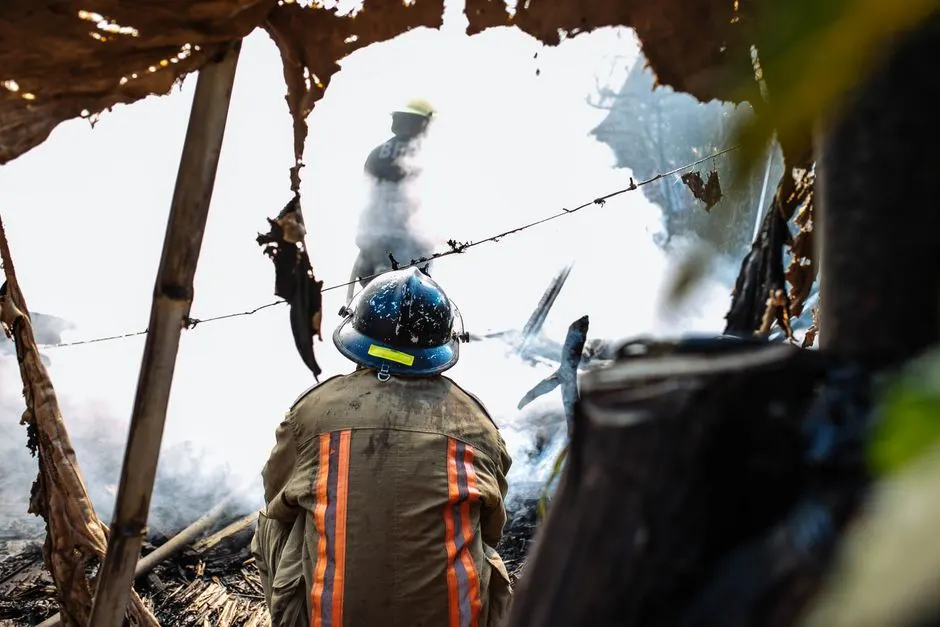
The fire and smoke damage restoration process for Boise homes is a seven-step job: emergency board-up, damage assessment, water removal, soot and residue cleanup, smoke odor removal, structural repair, and final inspection. Most Boise homes we handle are back to move-in condition in 2 to 6 weeks, depending on how far smoke traveled through the HVAC system and how much water the fire hoses left behind. This article walks through each step, what it costs in 2026, and the mistakes that turn a 3-week job into a 3-month one.
Fire and smoke damage restoration is the trade that reverses what fire, soot, and extinguisher water do to a house - it is needed the moment the flames are out, not after you finish sorting through the wreckage. We run this process daily across the Treasure Valley, from Disaster Cleanup in North End bungalows with knob-and-tube wiring to newer builds out in Harris Ranch. If you want the short version of who we are, our Disaster Cleanup Boise ID page covers the full range of what we handle.
What the fire and smoke damage restoration process looks like in Boise
The fire and smoke damage restoration process in Boise follows a fixed order because each step depends on the one before it. You cannot remove smoke odor from a room that is still wet. You cannot dry a room that still has soot on the walls, because soot smears and stains the moment moisture touches it. And you cannot rebuild anything until the adjuster has documented the loss.
Here is the sequence we follow on every job, whether it is a kitchen fire in the Boise Bench or a chimney fire up in the Highlands:
- Board-up and securing the structure
- Damage assessment and documentation
- Water removal and structural drying
- Soot and smoke residue cleanup
- Smoke odor removal and air scrubbing
- Structural repairs and reconstruction
- Final walkthrough and clearance
Two things make Boise jobs different from what you see on national restoration TV. First, our dry air and 4,700-foot elevation mean wood framing dries faster than in coastal markets - a wall that would take five days to dry in Seattle is often dry in three here. Second, our wildfire seasons have trained local adjusters to look hard at smoke infiltration, not just flame damage. If your fire happened during a bad smoke year, expect the adjuster to test the HVAC ducts and attic insulation separately.
Step 1: Emergency board-up and securing your Boise home
Board-up happens the same day, usually within 2 to 4 hours of your call. Fire crews break windows to vent heat and smoke, and they cut holes in the roof or walls to let gases escape. Until those openings are sealed, your house is open to rain, to theft, and to the neighborhood cats.
We secure every opening with plywood and structural bracing, and we tarp any roof cuts. If the fire was big enough that the structure is unsafe, we shore up load-bearing walls before anyone else goes inside. This is also when we set up temporary power and lighting so the assessment crew can actually see what they are looking at.
If you are dealing with a fire that came in on the back of a storm - a lightning strike, a downed line - our Storm Damage Restoration Boise ID team handles the exterior damage at the same time so you are not coordinating two contractors.
Step 2: Damage assessment and documenting the loss
Damage assessment is where the job is either set up correctly or set up to fail. We walk every room, photograph and measure every affected surface, and test for hidden smoke pockets in attics, crawl spaces, and ductwork. A fire in a Boise Bench home with a finished basement can push smoke into the crawl space through the floor penetrations, and if nobody checks, that smell comes back in August.
We use thermal imaging to find heat damage behind drywall and moisture meters to map where the fire hoses soaked the framing. Everything gets logged with room-by-room notes and photo evidence you can hand straight to your adjuster.
Typical assessment findings in Boise homes:
- Smoke residue on the ceiling and upper third of walls in rooms two or three doors away from the fire
- Soot inside the HVAC return and supply ducts in roughly 6 out of 10 jobs
- Water saturation in the ceiling below the fire room, often 18 to 24 inches out from the origin
- Charred framing that looks surface-level but is structurally compromised once probed
Step 3: Water removal and drying after the fire hoses
Water removal comes before anything else because standing water keeps smoke particles suspended in the air and feeds mold within 24 to 48 hours. A typical house fire leaves 50 to 300 gallons of extinguisher and hose water in the structure. We extract it, then set drying equipment sized to the cubic footage of each affected room.
Expect 3 to 5 days of drying for most Boise homes, with daily moisture readings. We use desiccant dehumidifiers and high-velocity air movers, and we seal off unaffected rooms so we are not drying the whole house. If the fire was in a bathroom or kitchen, we check the floor assembly below - water loves to sit on top of a subfloor and rot it quietly.
If the fire was caused by a plumbing failure - a water heater, a supply line - the water damage is often worse than the fire damage. Our Water Damage Restoration Boise ID crew handles that side of the loss so the drying and the fire cleanup happen under one schedule.
Step 4: Soot and smoke residue cleanup in Boise homes
Soot and smoke residue cleanup is the most labor-intensive part of the job, and it is where cheap contractors cut corners. Smoke residue is not just black dust. It is a mix of carbon, oils, and acidic compounds that etch metal, pit chrome, and stain painted surfaces within days.
We match the cleaning method to the residue type. Dry soot from a fast, hot fire gets HEPA-vacuumed first, then dry-chem sponged. Wet, oily soot from a slow-burning fire gets a different chemical and a different dwell time. Porous materials - drywall paper, insulation, carpet pad, upholstery - usually come out rather than get cleaned, because residue keeps off-gassing from them for months.
Hard surfaces get cleaned in this order:
- HEPA vacuum to remove loose particles
- Dry chemical sponge on walls and ceilings
- Wet cleaning with a pH-matched detergent
- Rinse and dry
- Seal with an encapsulant where residue soaked into the substrate
We also clean the HVAC system, because every time your furnace runs it pulls air from the return and pushes it through the whole house. Skip the ducts and you have just redistributed the smoke.
Step 5: Smoke odor removal after fire in Boise Idaho
Smoke odor removal after fire in Boise Idaho is not about masking the smell. It is about destroying the odor molecules. If you can still smell smoke after the walls are clean, the source is somewhere the sponge did not reach - usually insulation, subfloor, ductwork, or the back side of cabinets.
We use three tools together. Hydroxyl generators run continuously to break down odor compounds at a molecular level. Thermal fogging pushes a deodorizing fog into the same crevices the smoke reached. And ozone treatment, used only in unoccupied spaces, oxidizes whatever is left. For heavy smoke jobs we also seal the framing with a shellac-based primer before any new drywall goes up.
This is the step where Boise's wildfire experience pays off. Our smoke odor removal Boise team has spent years getting wildfire smell out of homes that were never on fire, so we know exactly how deep smoke travels through a structure.
Step 6: Structural repairs and reconstruction
Structural repairs and reconstruction start once the structure is dry and the air is clean. This is the phase that gets your house back to looking like a house: new drywall, paint, flooring, trim, cabinets, and fixtures. We handle the whole scope, so you are not bouncing between a restoration crew and a general contractor.
Typical repairs after a Boise house fire:
- Replace charred framing and sheathing
- New drywall and texture in fire- and smoke-affected rooms
- Paint with a stain-blocking primer on every smoke-exposed surface
- New flooring in water-affected areas
- Cabinet and countertop replacement in the fire room
- Roof and window repair from venting and firefighting
For commercial properties - restaurants, retail, offices - the same sequence runs on a compressed timeline so you can reopen. Our Commercial Disaster Cleanup Boise ID team handles those jobs with after-hours crews.
How long does fire and smoke restoration take in Boise?
Fire and smoke restoration in Boise takes 2 to 6 weeks for most homes, with small contained fires finishing in 10 to 14 days and major losses running 8 to 12 weeks. The variables are how much water the fire hoses left, how far smoke traveled through the HVAC, and how fast your insurance adjuster signs off on the scope.
Here is a realistic breakdown for a typical 1,800-square-foot Boise home with a kitchen fire:
- Board-up and assessment: day 1
- Water extraction and drying: days 1 to 5
- Soot and residue cleanup: days 4 to 10
- Odor removal: days 8 to 14
- Reconstruction: weeks 3 to 6
Two things slow Boise jobs down more than anything else. First, waiting on the adjuster to approve the scope - we can usually get an adjuster on site within 48 hours if you call us the day of the fire. Second, hidden water damage discovered after demolition, which adds 3 to 7 days of drying.
What fire damage restoration costs in Boise ID in 2026
Fire damage restoration in Boise ID in 2026 runs $3,200 to $8,500 for a small contained fire, $12,000 to $35,000 for a typical single-room fire with smoke spread, and $50,000 and up for a whole-house loss. Those are restoration costs before reconstruction; rebuild costs are separate and usually larger.
What drives the number:
- Square footage of smoke-affected area, not just the fire room
- Whether ductwork and insulation need replacement
- Water damage from firefighting
- Whether the structure needs board-up and roof tarping
- Contents cleaning versus replacement
Most homeowners pay their deductible and their insurer covers the rest. If you want a real number for your house, we will walk it and give you a written scope you can compare against your policy.
Does insurance cover fire and smoke damage restoration in Boise?
Yes - standard homeowner and commercial property policies in Idaho cover fire and smoke damage restoration, including board-up, water extraction, soot cleanup, odor removal, and rebuild, up to your policy limits. You pay your deductible; the insurer pays the rest.
What surprises people is how much the policy covers beyond the fire room. Smoke damage in a bedroom three doors down is a covered loss. HVAC cleaning is covered. Contents like clothing and furniture are covered under your personal property limit. What is usually not covered is anything the adjuster decides was pre-existing, so document everything before you throw it out.
We work directly with every major carrier and can bill them straight, so you are not fronting $20,000 and waiting for reimbursement.
Common mistakes homeowners make after a fire
The biggest mistake is walking back into a fire-damaged house without PPE. Soot and ash are respiratory irritants, and wet char is a slip hazard. Wait for clearance.
Other mistakes we see constantly in Boise:
- Running the furnace or AC before the ducts are cleaned - this pushes soot into every room in the house.
- Wiping walls with a wet rag - this smears oily soot into the paint and makes it permanent.
- Throwing out smoke-damaged items before the adjuster documents them - you lose the claim on those items.
- Waiting a week to call - mold starts in 24 to 48 hours, and smoke residue etches metal in 3 to 5 days.
- Hiring the cheapest bid - if the scope skips duct cleaning or odor treatment, the smell comes back the first hot week of summer.
When to call a professional
Call a professional if the fire was bigger than a stovetop flare-up, if smoke reached a second room, if the fire department used water, or if you can smell smoke 48 hours after the fire. Any one of those means the damage is deeper than what you can see.
Rapid Disaster Cleanup Boise id handles the full process - board-up, assessment, water removal, soot cleanup, odor removal, and rebuild - under one roof. We work with your insurance, we document everything, and we do not leave until the smell is gone and the moisture readings are dry. If you are not sure whether you need us, call and describe what you see; we will tell you straight.
Frequently Asked Questions
What is the fire and smoke damage restoration process in Boise?
It is a seven-step process: emergency board-up, damage assessment, water removal and drying, soot and residue cleanup, smoke odor removal, structural reconstruction, and a final walkthrough. In Boise, most homes move through those steps in 2 to 6 weeks, with drying taking 3 to 5 days and odor treatment 3 to 7 days.
How long does fire damage restoration take in Boise ID?
Small contained fires take 10 to 14 days. A typical single-room fire with smoke spread takes 3 to 6 weeks. Whole-house losses run 8 to 12 weeks. The two biggest variables are how much water the fire hoses left and how quickly your adjuster approves the scope.
Can smoke damage be cleaned in Boise Idaho?
Yes. Hard surfaces, ductwork, and most structural materials can be fully cleaned with HEPA vacuuming, dry-chemical sponges, and pH-matched detergents. Porous items like carpet pad, insulation, and upholstery usually get replaced because residue keeps off-gassing. Odor treatment with hydroxyls and thermal fogging finishes the job.
Does insurance cover fire and smoke damage restoration in Boise?
Yes. Standard Idaho homeowner policies cover board-up, water extraction, soot cleanup, odor removal, and reconstruction up to your limits, minus your deductible. Smoke damage in rooms away from the fire is covered too. We bill carriers directly so you are not paying out of pocket and waiting for reimbursement.
How much does fire damage restoration cost in Boise ID in 2026?
Expect $3,200 to $8,500 for a small contained fire, $12,000 to $35,000 for a single-room fire with smoke spread, and $50,000 and up for a whole-house loss. Reconstruction is priced separately. Most homeowners pay only their deductible.
Get help with Disaster Cleanup in Boise
If your Boise home has fire or smoke damage, the clock is running - mold starts in 24 to 48 hours and smoke residue etches surfaces in days. Call us and we will board up, assess, and start drying the same day.
Call Rapid Disaster Cleanup Boise id at 208 848-5209. We answer 24/7, we work with your insurance, and we do not stop until your house smells like a house again.